




Employer Sponsored Visas in Australia
Employer sponsored visas can allow an eligible Australian business to sponsor a suitably skilled worker for a temporary, permanent or regional position.
The correct pathway depends on the employer, the role, the nominated occupation and the applicant’s experience, qualifications and circumstances.
Stage 1
Understand Employer Sponsored Migration
Employer sponsored migration is a two-sided process. The business must meet the relevant sponsorship and nomination requirements, while the worker must meet the visa requirements for the nominated role.
Temporary Pathway
A temporary skilled visa may help an employer address an eligible workforce need and may provide a pathway to longer-term options in some circumstances.
Permanent Pathway
Permanent employer nomination may be available where the employer, position and applicant satisfy the requirements of the relevant stream.
Regional Pathway
Regional employer sponsorship can involve location, occupation and employment conditions that differ from metropolitan pathways.
Stage 2
Compare the Main Employer Sponsored Visa Pathways
These are the main pathways commonly considered. Each visa has separate streams and requirements, so the subclass should be selected only after reviewing the employer, position and applicant together.
Subclass 482
Skills in Demand Visa
A temporary employer sponsored pathway for eligible skilled positions.
View Subclass 482Subclass 186
Employer Nomination Scheme
A permanent residence pathway for eligible employer-nominated workers.
View Subclass 186Subclass 494
Skilled Employer Sponsored Regional
A provisional pathway for eligible positions with a regional employer.
View Subclass 494Stage 3
Check the Employer, Position and Applicant
A strong application starts by checking every part of the proposed sponsorship arrangement before choosing a visa stream.
Employer and Sponsorship
Confirm that the business can meet the sponsorship obligations and requirements relevant to the selected pathway.
Genuine Position
Check that the position, duties and business need are genuine and properly documented.
Occupation and Duties
Match the nominated occupation to the actual tasks, required skill level and applicable occupation framework.
Salary and Employment Conditions
Review the proposed salary, market rate and employment conditions against the requirements applying to the pathway.
Skills and Experience
Confirm that the applicant’s qualifications, work history, registration and any required skills assessment support the nominated role.
Visa Requirements
Review English, health, character, age and any stream-specific or regional criteria that apply.
Stage 4
Follow the Employer Sponsored Visa Process
The order can vary by subclass and stream, but the following sequence provides a practical framework for preparing the matter.
Review Employer Eligibility
Confirm the business structure, operations, sponsorship status and capacity to meet its obligations.
Confirm the Position and Occupation
Review the role, duties, location, occupation code, salary and supporting business evidence.
Review Applicant Eligibility
Check the worker’s experience, qualifications, English, registration and other visa criteria.
Select the Correct Visa Pathway
Compare Subclasses 482, 186 and 494 and identify the appropriate stream and strategy.
Prepare Sponsorship and Nomination
Compile the employer and position evidence, including any required recruitment and employment documentation.
Lodge the Visa Application
Prepare the applicant evidence carefully and lodge the connected applications in the required sequence.
Stage 5
Explore Employer-Sponsored Opportunities
Use the existing Shada directories to explore occupations, regional agreements and employers. Start with the pathway that best matches what you already know.
Choose the Relevant Occupation Framework
Different employer-sponsored pathways use different occupation frameworks. Check the correct directory before relying on an occupation title or ANZSCO code.

482 and relevant 186 pathways
Core Skills Occupation List
Search occupations relevant to the Core Skills stream and applicable employer-nominated pathways.
Explore the CSOL
Subclass 494
Regional Employer-Sponsored Occupations
Review occupations relevant to the Skilled Employer Sponsored Regional visa framework.
Explore Regional Occupations
Designated areas
DAMA Occupations
Search occupations available through Designated Area Migration Agreements across participating regions.
Explore DAMA OccupationsExplore by location
Featured DAMA Regions
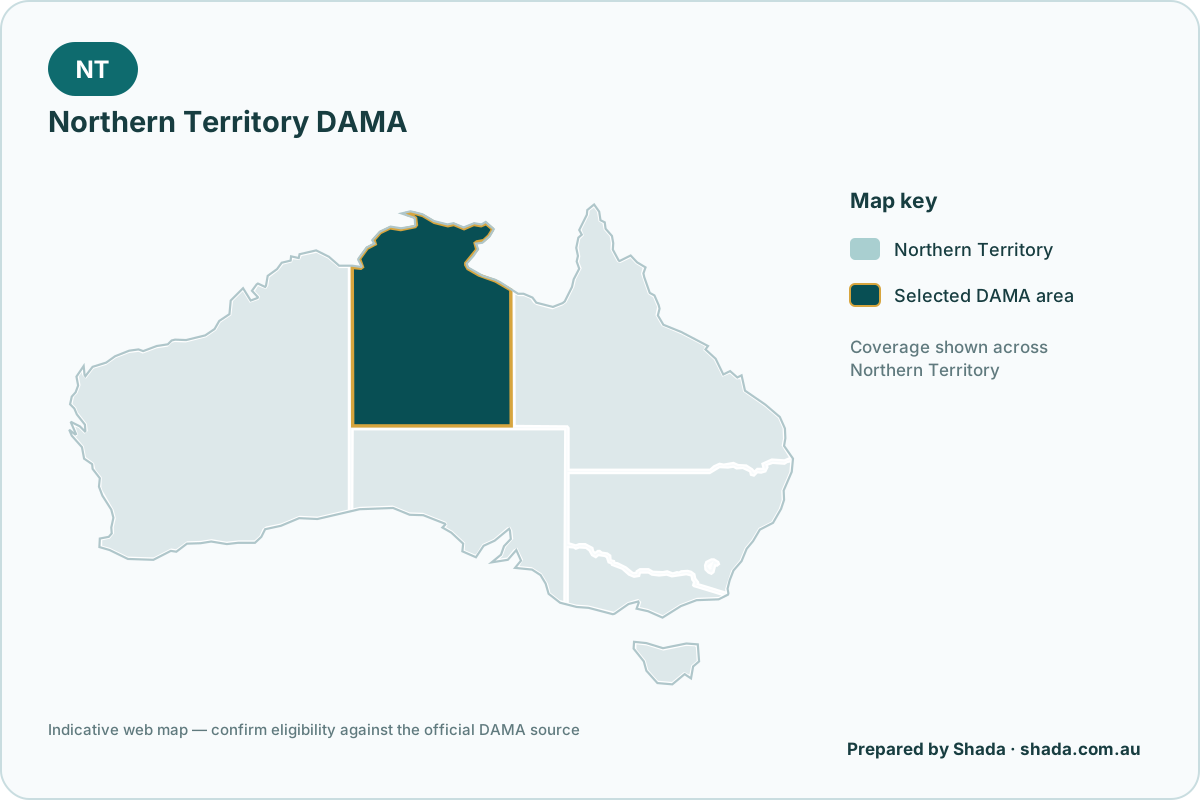
Northern Territory
Northern Territory DAMA
Explore the regional agreement, available occupations and participating employer information.
Explore this region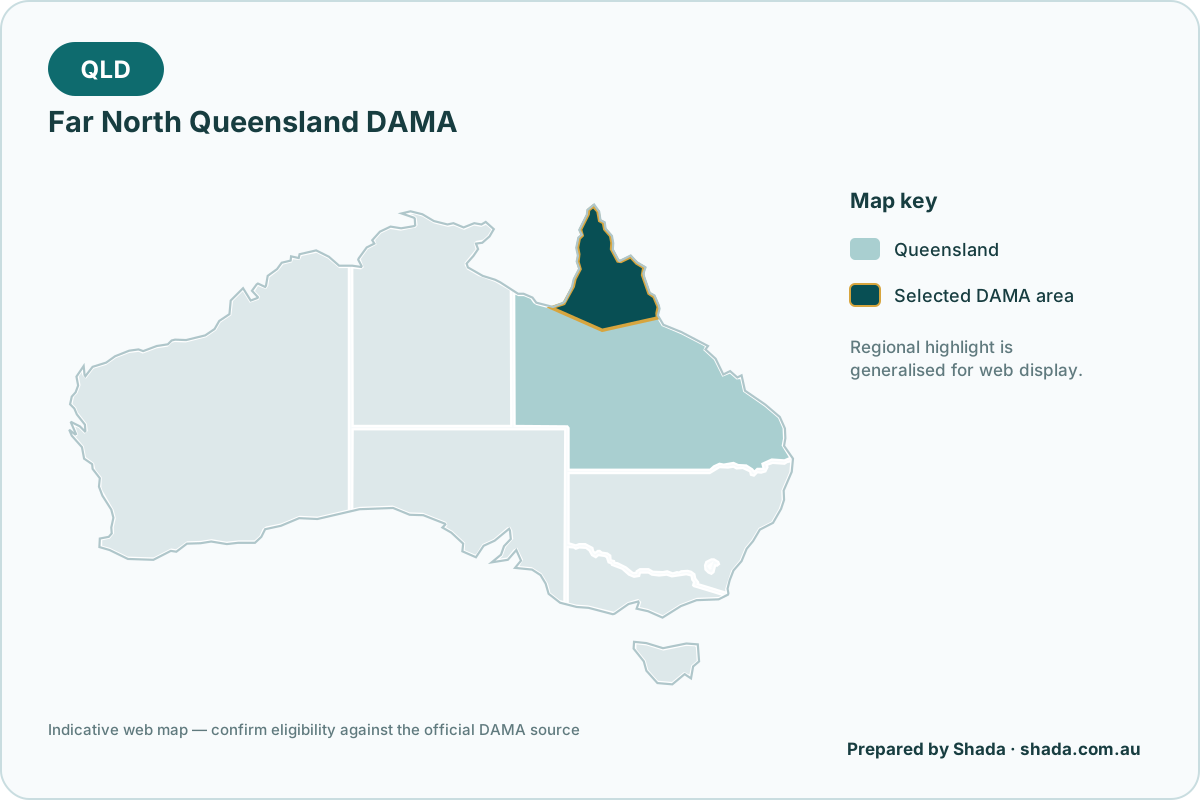
Queensland
Far North Queensland DAMA
Review occupations and regional information for the Far North Queensland designated area.
Explore this region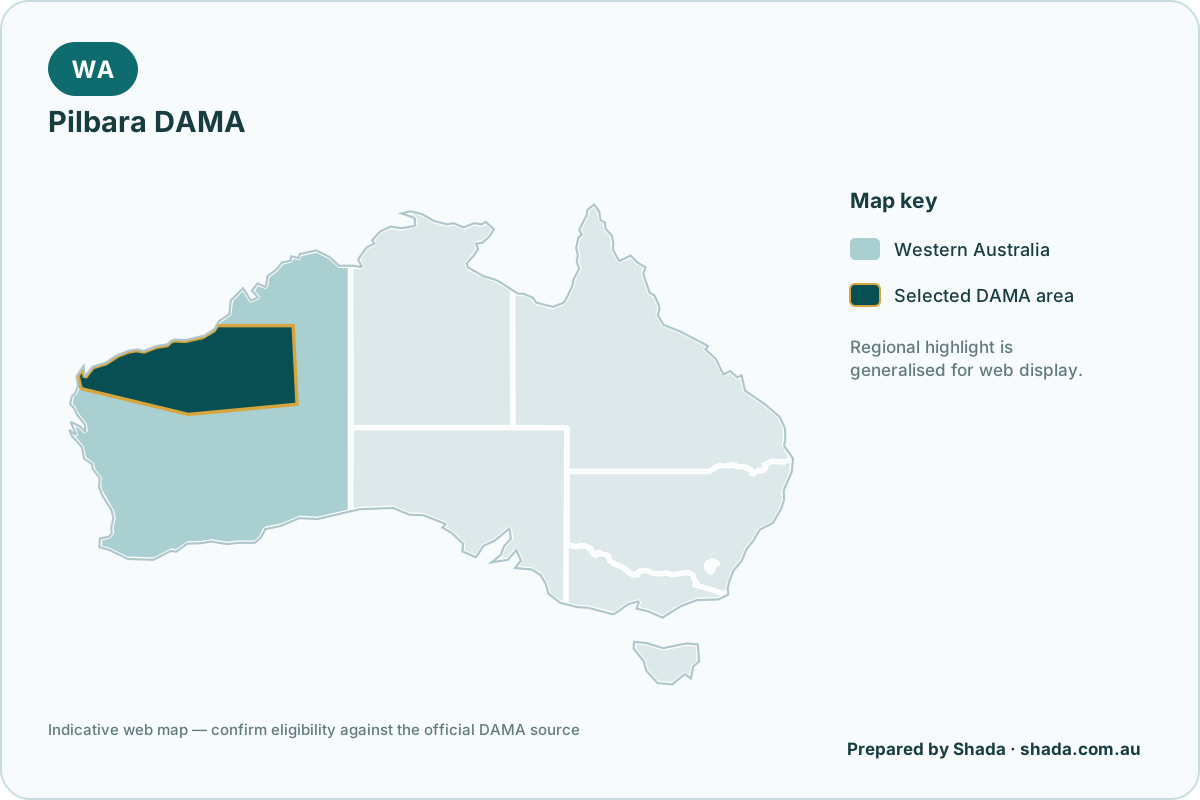
Western Australia
Pilbara DAMA
Explore the Pilbara regional agreement, its occupations and employer information.
Explore this regionExplore by employer
Search the DAMA Employer Registry
Browse employer records by business name, industry and DAMA region, then review the occupation and visa pathway separately.
A directory entry does not confirm a current vacancy, active recruitment or willingness to sponsor a particular applicant.
Real occupation examples
Explore Sample DAMA Occupations



For skilled workers
Find a Possible Pathway
Check your occupation, compare regional availability and understand the employer-sponsored visa requirements before approaching an employer.
Start a Visa AssessmentFor Australian employers
Review Sponsorship Options
Assess the business, genuine position, occupation and proposed applicant together before selecting a sponsorship pathway.
Request Employer AdviceStage 6
Frequently Asked Questions
What is an employer sponsored visa?
It is a visa pathway in which an eligible Australian employer sponsors or nominates a worker for a genuine skilled position. The exact requirements depend on the visa subclass and stream.
Which employer sponsored visa may suit me?
The answer depends on the employer, role, location, occupation and your own eligibility. Subclasses 482, 186 and 494 should be compared before a pathway is selected.
Can employer sponsorship lead to permanent residence?
Some employer sponsored pathways provide permanent residence directly, while some temporary or regional pathways may lead to later options if all relevant requirements are met.
What must the employer do?
The employer may need to satisfy sponsorship, nomination, position, salary, recruitment and ongoing obligation requirements. These vary by visa and stream.
Do I need a skills assessment?
A skills assessment may be required depending on the visa, stream, occupation, passport and circumstances. It should be checked early rather than assumed.
Can I change employer after the visa is granted?
Employer sponsored visas can impose conditions and time limits when employment changes. Obtain advice before changing employer, role or occupation.
Does the nominated occupation need to match my duties?
Yes. The selected occupation should accurately reflect the genuine position and the work you will perform, not simply the job title used by the business.
Can a regional employer sponsor a worker?
Regional employers may have access to Subclass 494 and other arrangements, subject to the location, occupation, employer and applicant requirements.
Next Step
Review the Employer, Position and Applicant Together
A clear assessment can identify the most suitable pathway, the evidence required and any issues to address before lodgement.