


Australian family migration pathway
Orphan Relative Visa Australia (Subclass 117 & 837)
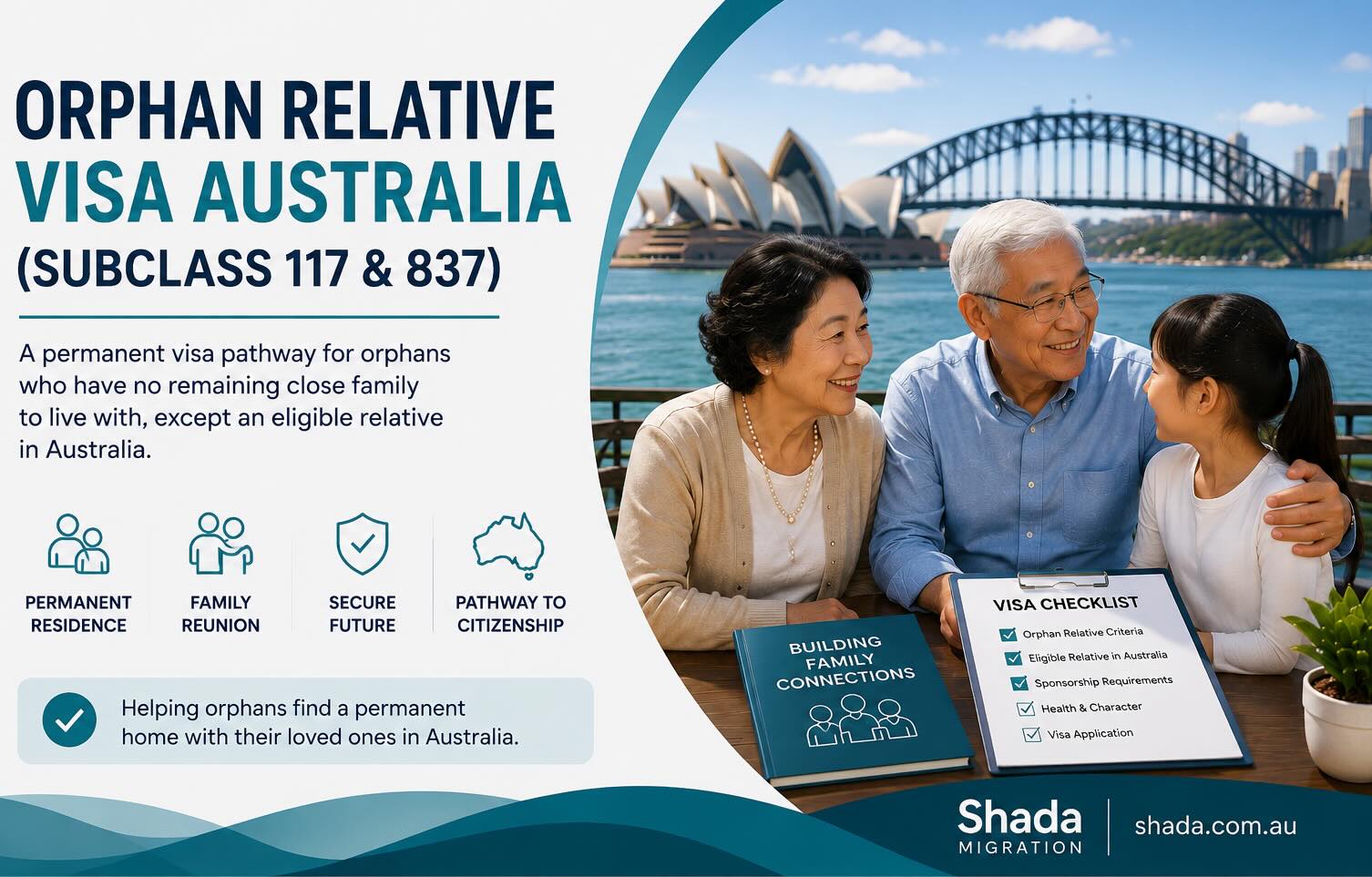
The Orphan Relative Visa allows certain children living outside Australia to migrate permanently to Australia and live with an eligible relative where their parents are unable to care for them.
This visa category is designed to provide a pathway for children who have lost their parents, whose parents are permanently incapable of caring for them, or whose whereabouts cannot be determined.
- Subclass 117 – Offshore application pathway
- Subclass 837 – Onshore application pathway
Both visa subclasses provide permanent residence and allow eligible children to live permanently with their sponsoring relatives in Australia.
- Permanent residence visa pathway
- Family reunification for eligible children
- Sponsorship by an eligible relative
- Access to education and healthcare
- Potential pathway to Australian citizenship
- What is an Orphan Relative Visa?The Orphan Relative Visa is a family migration pathway that enables certain children to live permanently in Australia with a relative who is w…
- Who Can Apply?Applicants must satisfy a number of legislative requirements before an Orphan Relative Visa can be granted.
- Who is Considered an Eligible Child?The visa is intended for children who are unable to remain under the care of their parents and who require long-term care from a relative in A…
- Who Can Sponsor the Child?The child must generally be sponsored by an eligible relative who is an Australian citizen, Australian permanent resident or eligible New Zeal…
Stage 1
What is an Orphan Relative Visa?
The Orphan Relative Visa is a family migration pathway that enables certain children to live permanently in Australia with a relative who is willing and able to care for them.
The visa is intended for circumstances where the child cannot be cared for by their parents due to death, permanent incapacity or other recognised circumstances under Australian migration law.
The primary objective of the visa is to allow eligible children to be reunited with family members who can provide long-term care, support and stability.
Stage 2
Who Can Apply?
Applicants must satisfy a number of legislative requirements before an Orphan Relative Visa can be granted.
Child Applicant
The applicant must be an eligible child under the relevant visa provisions.
Eligible Relative
The child must have an eligible relative in Australia willing to sponsor and care for them.
Parental Circumstances
The child's parents must satisfy specific circumstances prescribed by migration legislation.
Health and Character
Relevant health and character requirements must be satisfied before visa grant.
Stage 3
Child, Sponsor & Parental Requirements
An Orphan Relative Visa application is assessed by looking at the child’s eligibility, the circumstances of the child’s parents, the proposed Australian sponsor and the child’s health and character requirements together.
Child Eligibility & Parental Circumstances
The child must satisfy the relevant Orphan Relative Visa requirements and be unable to remain under the care of their parents. The Department considers the child’s age, identity, family relationships, guardianship arrangements and the circumstances explaining why long-term care from a relative in Australia is required.
Evidence must generally establish that the child’s parents are deceased, permanently incapable of caring for the child, or that their whereabouts cannot reasonably be established. Supporting documents may include identity and relationship evidence, death certificates, medical evidence, court or guardianship documents and other material relevant to the child’s circumstances.
Sponsor, Care, Health & Character
The child must generally be sponsored by an eligible relative who is an Australian citizen, Australian permanent resident or eligible New Zealand citizen. The sponsor must be willing and able to take responsibility for the child’s accommodation, welfare and ongoing support in Australia.
Relevant health and character requirements must also be satisfied before visa grant. The documents required will depend on the child’s age, history and individual circumstances.
Stage 4
Subclass 117 vs Subclass 837
The Orphan Relative Visa category contains two subclasses that provide permanent residence. The primary distinction is where the child is located when the visa application is lodged and when the visa is granted.
Subclass 117 (Offshore)
- Permanent residence visa
- Application generally lodged outside Australia
- Child generally outside Australia at visa grant
- Requires eligible Australian relative sponsor
- Long-term care arrangements required
- Permanent migration pathway
Subclass 837 (Onshore)
- Permanent residence visa
- Application generally lodged in Australia
- Child generally in Australia at visa grant
- Requires eligible Australian relative sponsor
- Long-term care arrangements required
- Permanent migration pathway
The appropriate visa subclass depends largely on the child's location and immigration circumstances at the time of application.
Stage 5
Benefits of the Orphan Relative Visa
Successful applicants receive Australian permanent residence and the opportunity to build a secure future within their family network in Australia.
Permanent Residence
Live permanently in Australia with an eligible relative.
Access to Education
Access Australia's education system and long-term educational opportunities.
Medicare Access
Eligible permanent residents may access Australia's public healthcare system.
Citizenship Pathway
Eligible applicants may later apply for Australian citizenship.
Stage 6
Important Considerations
Orphan Relative Visa applications are often emotionally complex and document intensive. The Department must be satisfied that the child genuinely meets the legislative definition of an orphan relative and that appropriate care arrangements exist in Australia.
Evidence commonly reviewed by the Department may include:
- Birth certificates and identity documents
- Evidence of family relationships
- Death certificates where applicable
- Medical evidence regarding parental incapacity
- Court orders or guardianship documents
- Evidence relating to the proposed care arrangements in Australia
- Sponsorship documentation from the Australian relative
Applications involving children require careful preparation to ensure all legal and welfare considerations are properly addressed.
Stage 7
Frequently Asked Questions
What is the difference between Subclass 117 and Subclass 837?
The primary difference is where the child is located when the application is lodged and when the visa is granted. Subclass 117 is generally an offshore pathway, while Subclass 837 is generally an onshore pathway.
Does a child need to be literally an orphan?
Not necessarily. Australian migration law may recognise circumstances where parents are deceased, permanently incapable of caring for the child, or where their whereabouts cannot reasonably be established.
Who can sponsor an Orphan Relative Visa applicant?
An eligible Australian citizen, Australian permanent resident or eligible New Zealand citizen who is related to the child may be able to act as sponsor, subject to legislative requirements.
Can grandparents sponsor a child?
In some circumstances, grandparents may qualify as eligible relatives. The specific family relationship should be assessed against current migration legislation.
What evidence is usually required?
Applications commonly require identity documents, birth certificates, evidence of family relationships, sponsorship documents, guardianship evidence and documentation relating to the parents' circumstances.
Does the child become a permanent resident?
Yes. Both Subclass 117 and Subclass 837 are permanent residence visas.
Can the child eventually become an Australian citizen?
Eligible permanent residents may later apply for Australian citizenship if they satisfy the citizenship requirements applicable at that time.
Why is this visa category assessed carefully?
The Department must ensure that the visa genuinely serves the child's best interests, that appropriate care arrangements exist, and that all legislative requirements relating to guardianship and family circumstances are satisfied.

Reviewed by Mohammad Reza Azimi
Principal Registered Migration Agent at Shada Migration Services · MARN 0958292.
Next step
Get Advice About Your Family Visa Options
Family visa matters depend on the applicant, sponsor, family circumstances and supporting evidence. A consultation can help identify the appropriate pathway and the issues to address before lodgement.